Gateway of India

About

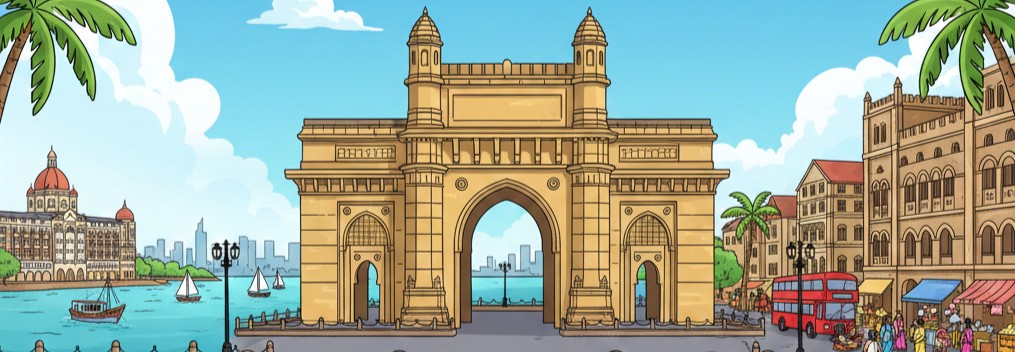
Stepping onto the Apollo Bunder promenade feels like walking through a living history book. The Gateway of India isn't just a structure; it’s a silent witness to the city's transformation from a group of seven islands to a global powerhouse.

Built to commemorate the visit of King George V, it eventually saw the last British troops depart, marking the end of colonial rule.


As a local, I can tell you that the magic lies in the details—the intricate lattice work (jali) on the basalt stone and the way the golden hour light hits the Taj Mahal Palace right behind it.

  • Cultural Hub: Watch the "Chana-jor-garam" sellers mingle with high-end tourists and luxury yacht enthusiasts.

  • Nautical Gateway: It remains the primary starting point for the Elephanta Caves ferry and private speedboat charters.

  • The Vibe: Best experienced at 6:30 AM for sunrise photography or after sunset when the arch is illuminated.

Gateway of India

Quick Summary


Gateway of India: Visitor Information Dashboard
  • Entry Fee: FREE (Mandatory security screening for all visitors).
  • Timings:
    The monument area is accessible 24 Hours; Ferry services run from 9:00 AM to 5:30 PM.
  • Elephanta Ferry (2026):
    ₹260 for Luxury/Upper Deck (Return)
    ₹200 for Economy.
  • Parking Alert: STRICT NO-PARKING ZONE.
    Use the BMC Multilevel Parking at Kala Ghoda to avoid the ₹10,000 fine.
  • Security Rules: Drones are strictly Banned;
    Large backpacks are not recommended as there is no cloakroom.


The Vibe (Intro)

There’s a specific "Mumbai Magic" that hits you the moment you step onto the Apollo Bunder promenade.

It’s the smell of the salty Arabian Sea mixed with the aroma of freshly roasted Chana-jor-garam.

  • Standing before the Gateway of India, you aren't just looking at a basalt arch; you’re standing at the junction where 19th-century colonial grandeur meets the chaotic, high-energy pulse of modern-day South Mumbai.
  • As the morning sun paints the yellow basalt in gold, you’ll see professional photographers chasing the perfect sunrise photography shot and travelers awaiting the Elephanta Caves ferry.
  • Even with the heavy security of 2026, the spirit of the "Gateway" remains inclusive—a place where the city comes to breathe, watch luxury yachts, and feel the sea breeze.


Architecture & The "Cardboard" History

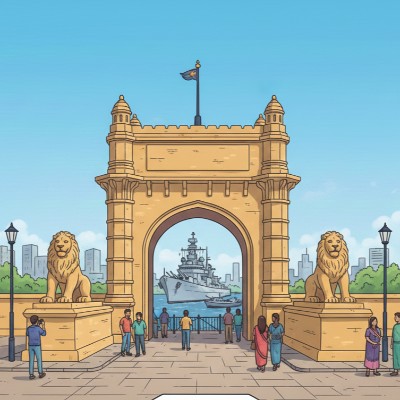
The Gateway of India is a masterclass in Indo-Saracenic architecture, a style that perfectly captures Mumbai’s "East meets West" DNA.

Designed by Scottish architect George Wittet, the structure is a triumphal arch that stands 26 meters (85 feet) tall and features a central dome 15 meters in diameter.


While most people see just a stone gate, look closer at the yellow Kharodi basalt stone; it was locally sourced, but the intricate perforated jali (lattice) screens were brought from Gwalior.

  • The Cardboard Secret: When King George V arrived in 1911, the stone monument didn't exist. He actually walked through a cardboard model; the real structure was only finished in 1924.
  • Symbol of Freedom: Ironically, the gate built to welcome the British became the spot where the last British troops marched out of India in 1948.


Ferries & Yachts

The Gateway of India serves as Mumbai's primary maritime hub, with multiple jetties offering everything from UNESCO site tours to luxury escapes.

  • Elephanta Caves Ferry:
    Operating from 9:00 AM to 5:30 PM
    Ride Time:
    about an hour.
    The Luxury Class return ticket is ₹260.
  • Pro Tip:
    Pay the ₹10 premium once on board to access the Upper Deck
    - Allows unobstructed views of the naval docks and the Mumbai skyline.
  • Jetty No. 5 (The Luxury Hub):
    Located opposite the Taj Mahal Palace, this jetty is for private speedboats and yacht charters.
  • Rates:
    Private sailboats start at ₹3,500 for 90 minutes
    a 20-minute speedboat ride to Mandwa/Alibaug starts around ₹6,500.
  • Security Note:
    Always carry a Photo ID for private bookings.

Note(s):

  • Be aware that drones are strictly prohibited during sailing.
  • Rates Mentioned above are approximate, and subject to change without notice
How to Reach 🚌🚇 / Parking Details

Getting to the Gateway of India is a test of patience if you drive, but a breeze if you use Mumbai’s newly expanded transit network. While the monument is in the far south of the city, it is exceptionally well-connected.

  • By Metro: (RECOMMENDED)
    The Mumbai Metro Line 3 (Aqua Line) is now the most efficient way to reach.
    Use the Hutatma Chowk or Cuffe Parade stations, followed by a short 5-minute taxi ride.
  • By Train & Bus:
    - From CST Station, board Bus 111 or 112 (₹10–15).
    - From Churchgate, the A-112 AC Bus is a dedicated shuttle service.
  • Taxi/Auto:
    Taxis from CST or Churchgate cost around ₹60–₹80.
    Note that Auto-rickshaws are NOT allowed in South Mumbai (SoBo).
  • Parking (Warning):
    There is Zero Parking at the monument.
    Parking in restricted zones carries a ₹10,000 fine.
  • Recommended Parking:
    - Park at the BMC Multilevel Parking in Kala Ghoda (₹60/hr) 
    - the P.D. Mello Road Pay & Park.

  • Distance Guide:
    CST Station (2.5 km)
    Churchgate (2 km)
    Mumbai Airport (25 km / ~90 mins in traffic).


Food Options & Budget (the SoBo Flavours)

Eating near the Gateway of India is an experience that spans from budget street eats to world-class fine dining. The area around Apollo Bunder and Colaba Causeway remains a food lover's paradise, but with a few modern shifts in pricing and accessibility.

  • Street Food
    Look for the 100-year-old "Chan-jor-garam" vendor near the promenade for a tangy ₹50 snack.
  • Legendary Cafes
    Cafe Mondegar (famous for murals) and Cafe Leopold are 5 minutes away.
    A meal for two costs roughly ₹1,500.
  • Must-Order
    Try the Chicken Hot Dog or Beef Steak at Mondy's and the Special Pasta at Leopold.
  • Affordable Meals
    Vasant Sagar near Nariman Point offers
    budget-friendly South Indian and Pav Bhaji (approx. ₹300 for two).
  • The High-End Experience
    For luxury, the Sea Lounge at the Taj Mahal Palace is the go-to for Heritage High Tea with an direct view of the Gateway.
  • Quick Tip
    Most street vendors near the jetty now accept UPI/GPay, but keep some cash for the smaller snack stalls.


Photography & Hidden Angles

As a photo-Enthuasist, I can tell you the Gateway of India is the most "cliché" yet rewarding subject in Mumbai. To get a shot that stands out everytime, you need to change your perspective.

  • The Sunrise Silhouette
    Arrive at 6:15 AM (the Golden Hour). Position yourself near the Shivaji Maharaj Statue, looking back at the arch. As the sun rises over the Arabian Sea, the Gateway becomes a perfect black silhouette against a purple-orange sky.
  • The Secret "Reflection" Shot
    Walk toward Jetty No. 5 (near the Yacht Club). There is often a small patch of water or a low-angle viewpoint here that allows you to capture the arch reflecting alongside the Taj Mahal Palace.
  • The "Pigeon Chaos" Frame
    Near the barricades, you’ll find the "bird men" feeding hundreds of pigeons. Set your shutter speed to 1/500s or higher to freeze the birds in flight with the basalt arch in the background.
  • The Yacht Club Angle
    For a shot without 5,000 tourists, walk toward the Royal Bombay Yacht Club side for a cleaner, side-profile view of the arch.
  • The Night Glow
    Post-sunset, the monument is lit with dynamic LED colors. Use a Long Exposure (2-4 seconds) on a tripod (if security allows) or a stable wall to capture the light trails of the passing ferries.

Security Tip:
While tripods are technically allowed, security may ask you to move if you block the walkway. Handheld Night Mode photography is recommended after 7:00 PM.


Places Nearby Gateway of India
Frequently Asked Questions
Q1: Is there an entry fee for visiting Gateway of India?
A1: Access to the monument and the surrounding promenade is completely free. However, every visitor must pass through a mandatory security screening, which can take 10-20 minutes during peak hours.
Q2: What are the current ferry timings for Elephanta Caves from Gateway of India, Mumbai?
A2: Ferries typically start at 9:00 AM and run every 30 minutes. The last boat departing for the island is usually at 3:30 PM, while the final return boat leaves at 5:30 PM. Note that services are suspended on Mondays and during heavy monsoon months.
Q3: Where is the safest place to park a car nearby Gateway of India, Mumbai?
A3: Avoid parking on the streets to prevent a ₹10,000 fine. The most reliable spot is the BMC Multilevel Pay & Park at Kala Ghoda, which is a 10-minute walk away. Alternatively, use the parking lot at P.D. Mello Road near the cruise terminal.
Q4: Can I carry a large backpack or suitcase while visiting Gateway of India, Mumbai?
A4: It is highly discouraged. While not strictly banned, there is no official cloakroom or luggage storage at the site. Carrying large bags will significantly slow down your progress through the security check.
Q5: Is drone photography allowed in the area near Gateway of India, Mumbai?
A5: Absolutely not. The entire vicinity is a Strict No-Fly Zone due to its proximity to sensitive naval docks and high-security landmarks. Unauthorized drone use will lead to immediate confiscation of equipment.
Q6: What is the cost of a return ticket to Elephanta Caves from Gateway of India, Mumbai?
A6: The current rate for a Luxury/Upper Deck return ticket is ₹260. Economy tickets are available for ₹200, though many travelers pay a small ₹10 premium on-board to access the top deck for better views.
Q7: How do I reach Gateway of India from CST station?
A7: You can take Bus No. 111 or 112 from the depot outside the station; it takes about 15 minutes. A taxi (black-and-yellow) will cost between ₹60 and ₹80, but be prepared for heavy traffic.
Q8: Are there public toilets available near Gateway of India?
A8: There are basic utilities near the entrance, but they are often crowded. For a more comfortable experience, your best bet is to use the facilities at nearby heritage cafes or the CSMVS Museum.
Q9: Can I visit the Gateway of India at night?
A9: Yes, the promenade is accessible 24 hours. The structure is spectacularly illuminated with LED lights after sunset, making it a very safe and popular spot for late-night walks.
Q10: Is a tripod allowed for photography while visiting Gateway of India, Mumbai?
A10: Technically, tripods are allowed for personal use. However, security may ask you to move if you are blocking the pedestrian flow during peak hours. Professional filming requires prior written permission.
Q11: What is the best time to avoid the crowds while visiting Gateway of India?
A11: The "sweet spot" is between 6:30 AM and 8:00 AM. You’ll share the space with a few locals and early-bird photographers rather than the thousands who arrive later in the day.
Q12: Do I need an ID to board the ferry boats from Gateway of India?
A12: It is mandatory to carry a government-approved photo ID if you are booking private yachts or speedboats. For the public ferry, it is good practice to have a digital copy on your phone.
Q13: while visiting Gateway of India is there any dress code requirements?
A13: There is no formal dress code for the public areas. However, comfortable footwear is essential for the stone promenade. If you intend to dine at the nearby Taj Mahal Palace, smart casuals are required.
Q14: Is the area near Gateway of India, mumbai wheelchair accessible?
A14: The promenade is flat and accessible. However, boarding the traditional ferries is very difficult for wheelchair users. For a better experience, consider the M2M Ro-Ro ferry from a different pier.
Q15: Is it safe for solo female travelers to visit Gateway of India?
A15: Yes, it is very safe. The area is a high-security zone with 24/7 police presence and CCTV surveillance. It is one of the most well-guarded tourist spots in the city.